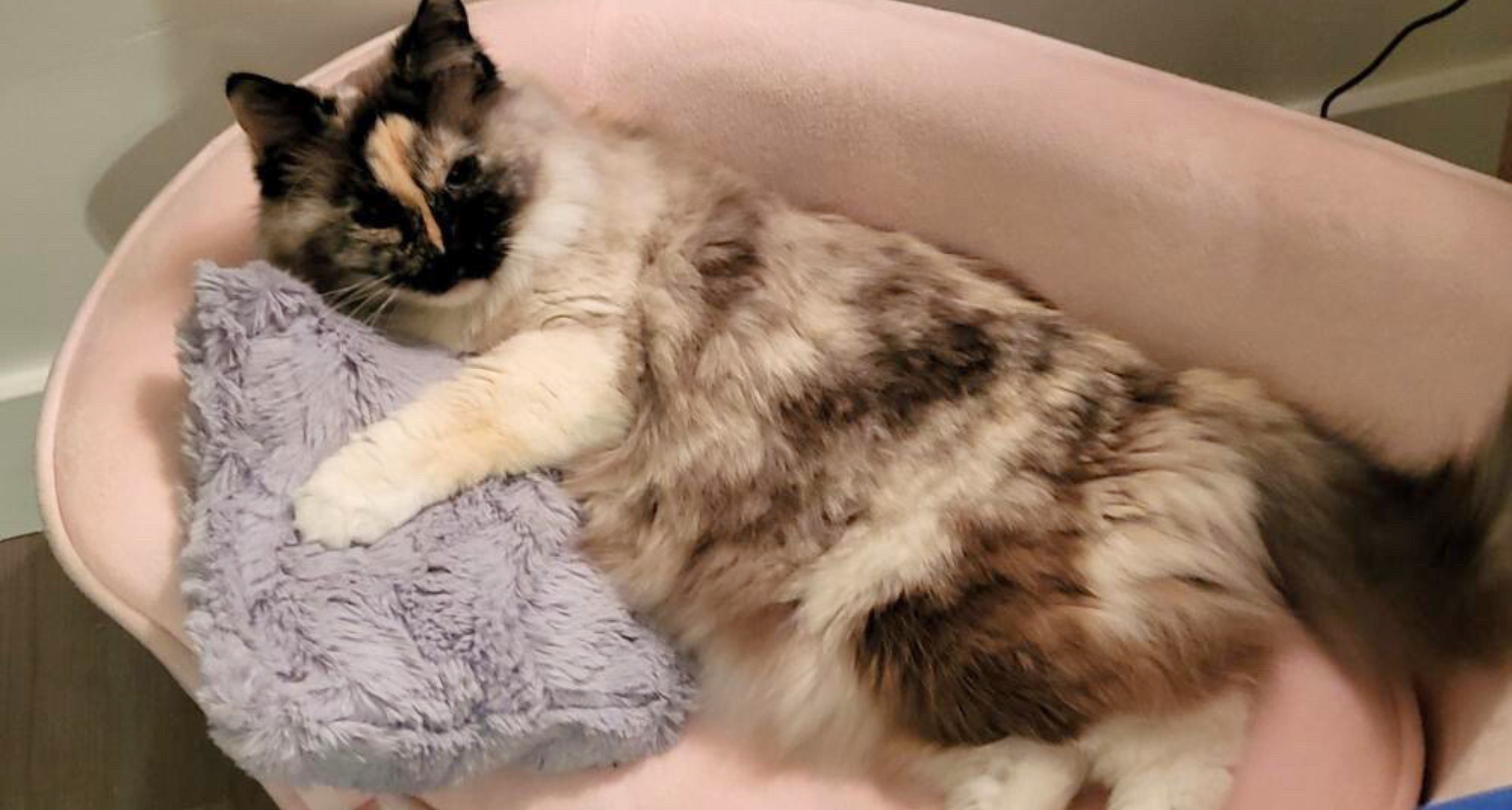
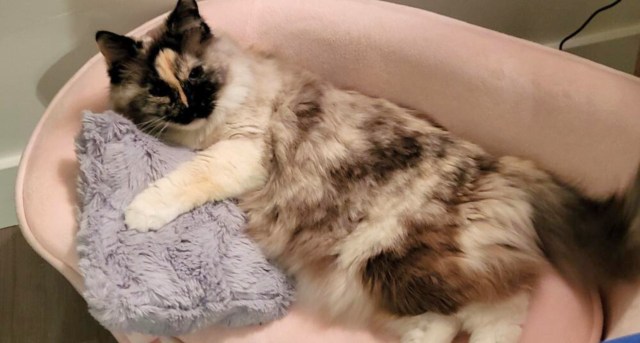
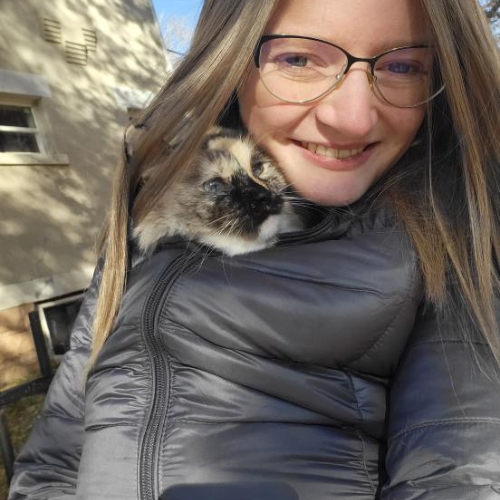
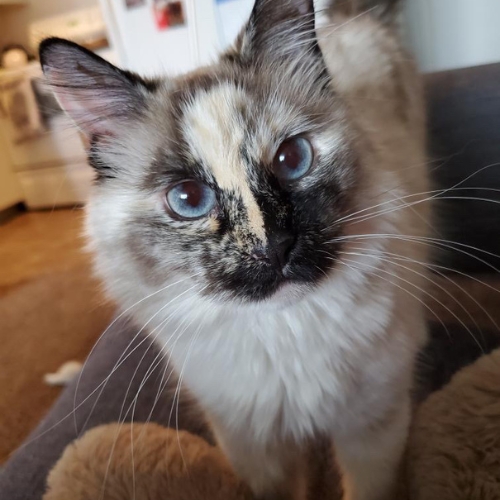
When Ashley visited Kitty City back in October of 2020, she had never had a cat before and described her expectations for what she might find as being low. She had some doubts about how affectionate and full of personality felines could be. But never did she imagine that she would find Phoebe— a 5-year-old kitty with the most enchanting blue eyes and sweetest demeanor.
Ashley decided to take a chance on Phoebe and brought her home. When they arrived, Ashley’s partner told her to “take a good look at [Phoebe] because she was going to be her best friend for the next 10-15 years.” Ashley said she wasn’t so sure he was right at the time, but she never should have doubted him.
Now Ashley can’t imagine her life without Phoebe. After about a month of living together, Phoebe began to open up and show off her personality and quirks, and the pair became absolutely inseparable. Phoebe now spends her days greeting Ashley the minute she gets home and cuddling on her lap while she reads. She also loves playing fetch, watching cat TV, and pondering on art pieces (and the wall), Ashley says.
At the end of the day, this is what Ashley has to say about Phoebe: “I couldn’t have made a better match if I tried. I love her more than words can describe, and couldn’t be happier that the humane society made it possible for us to find each other.”
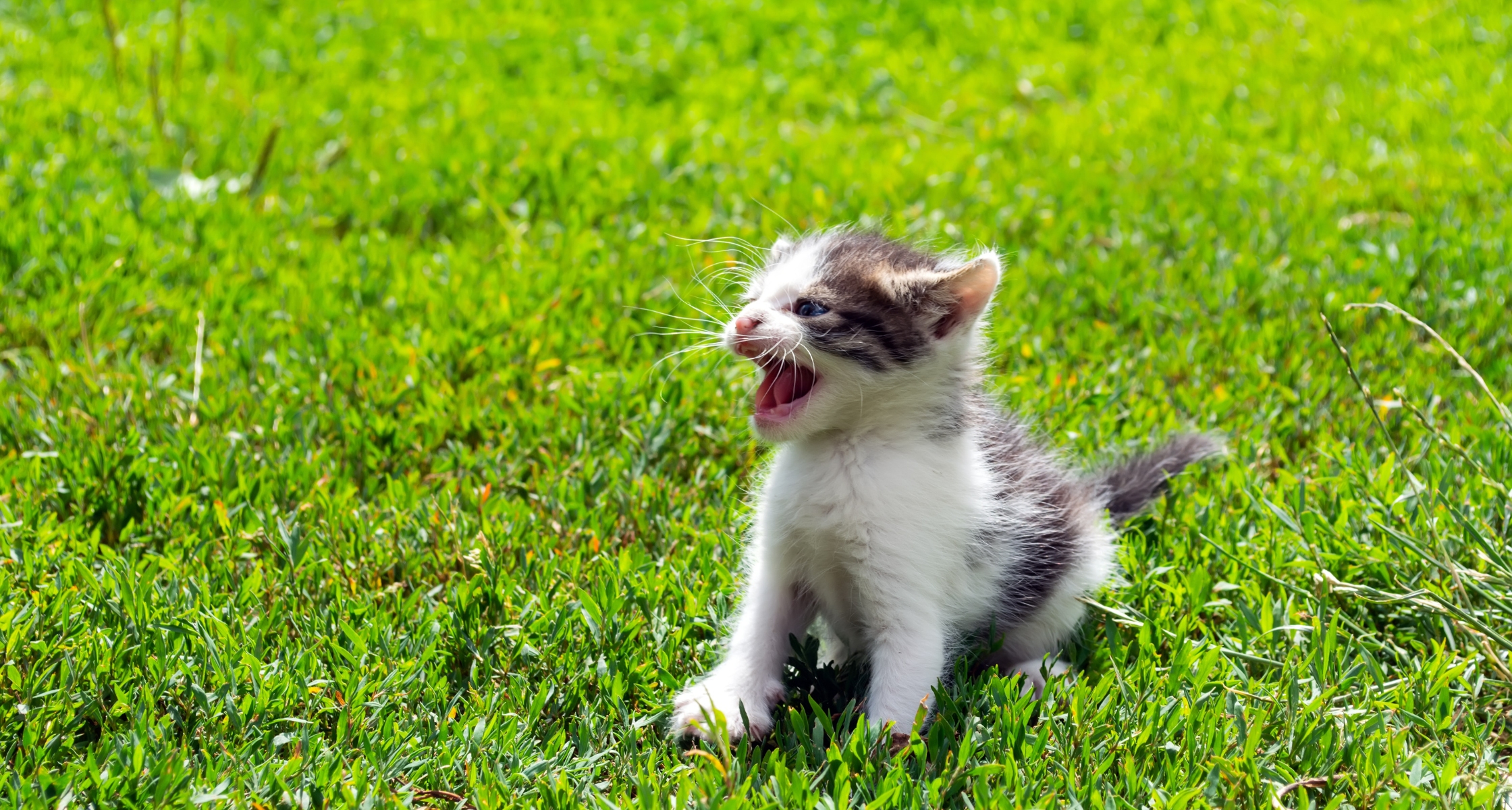
Ahhh, kitten season. It’s that magical time of year when the weather gets warmer, and suddenly, an influx of kittens are born into the world. As kitten season picks up speed, so do phone calls to local animal shelters from concerned citizens wondering what they should do with stray kittens they have found.
What to do if you find warm, clean, stray kittens:
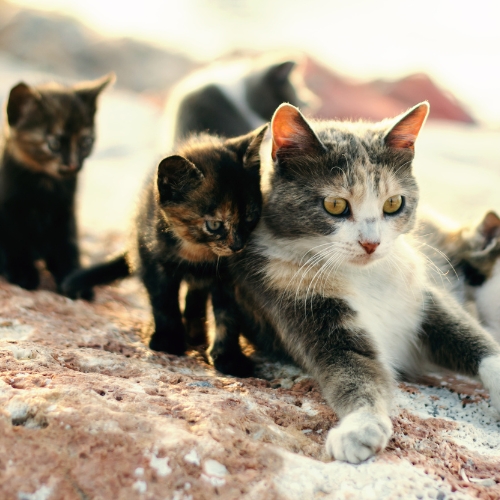
Our answer may surprise you, but most of the time, the answer is to leave stray kittens where you find them. We know this advice can be difficult to heed after so many years of hearing that you should bring stray kittens to the shelter. Still, data from organizations such as Ally Cat Allies and the ASPCA shows that kittens have a much better chance of survival if left where their mother cat can care for them. Even kittens that appear to be unattended likely have a mother cat looking out for them who will be distressed should they go missing.
Here’s a trick to make sure that mom is coming back to look after her litter: take some flour and spread a circle around the kittens, then leave. If a few hours later, there are paw prints in the flour. You can rest assured that a mother cat is keeping an eye on her kittens.
What to do if you find cold, malnourished, or sickly stray kittens:
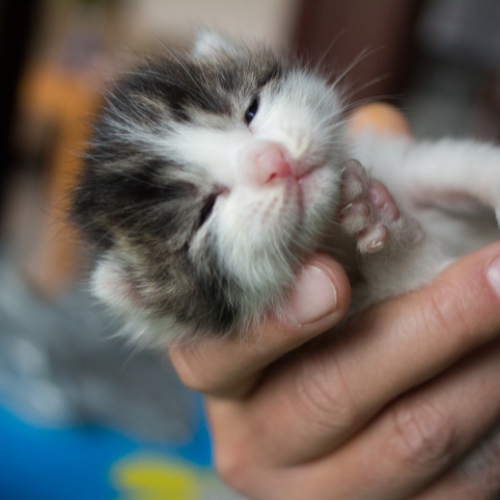
There are a few cases in which leaving stray kittens where they are may not be the best course of action. If the kittens appear malnourished, sickly, and/or overly dirty, and you have not seen a mother cat return within a few hours of finding the kittens, there are a couple of things you can do.
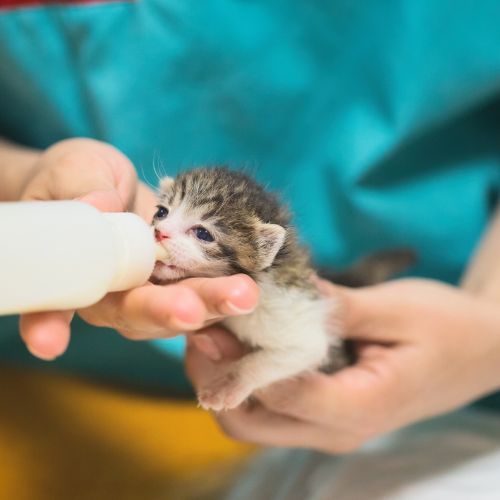
Foster: If you feel equipped to care for and bottle-feed the kittens until they are old enough to be spayed or neutered, fostering the kittens may be a good option. Contact our Foster Department for information and resources.
Contact Your Local Animal Services: Your local animal services will be able to help you determine the next best steps for the kittens. They may have you bring them to their shelter, or they may come and pick them up.
What about Trap Neuter Return?
Another way you can help your local community cats and reduce the number of homeless cats in your area is to see if your local shelter or rescue has a TNR (trap-neuter-return) program. These programs involve humanely trapping stray cats, bringing them into a shelter to be spayed or neutered, and returning them to the area in which they were found. Kittens can participate in TNR programs as young as 8 weeks of age so long as they weigh at least 2 lbs.
Our TNR program is called CATNIP. For more information on CATNIP, humane trap rental, and more, visit the TNR Page on our website.
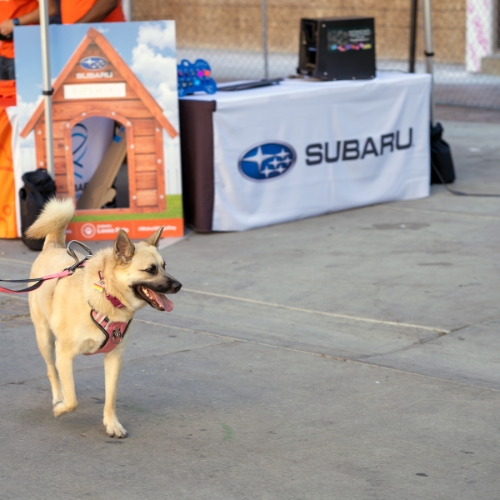
Join us on Saturday, May 20th, from 5–9 pm for Bark at the Moon, a dog-friendly event to raise funds to support the lifesaving programs at HSU. Tickets are $20 for adults and $10 for kids and include admission to the festival. Dogs must be six months of age or older, up to date on vaccinations, and socialized with other dogs and people.
“This is a fun community event to raise money for our homeless companion animals,” said Kaya Nielsen, HSU event manager. “We’re excited to return to The Gateway this year and grateful to the participating businesses for their support that allows us to bring people and pets together.”
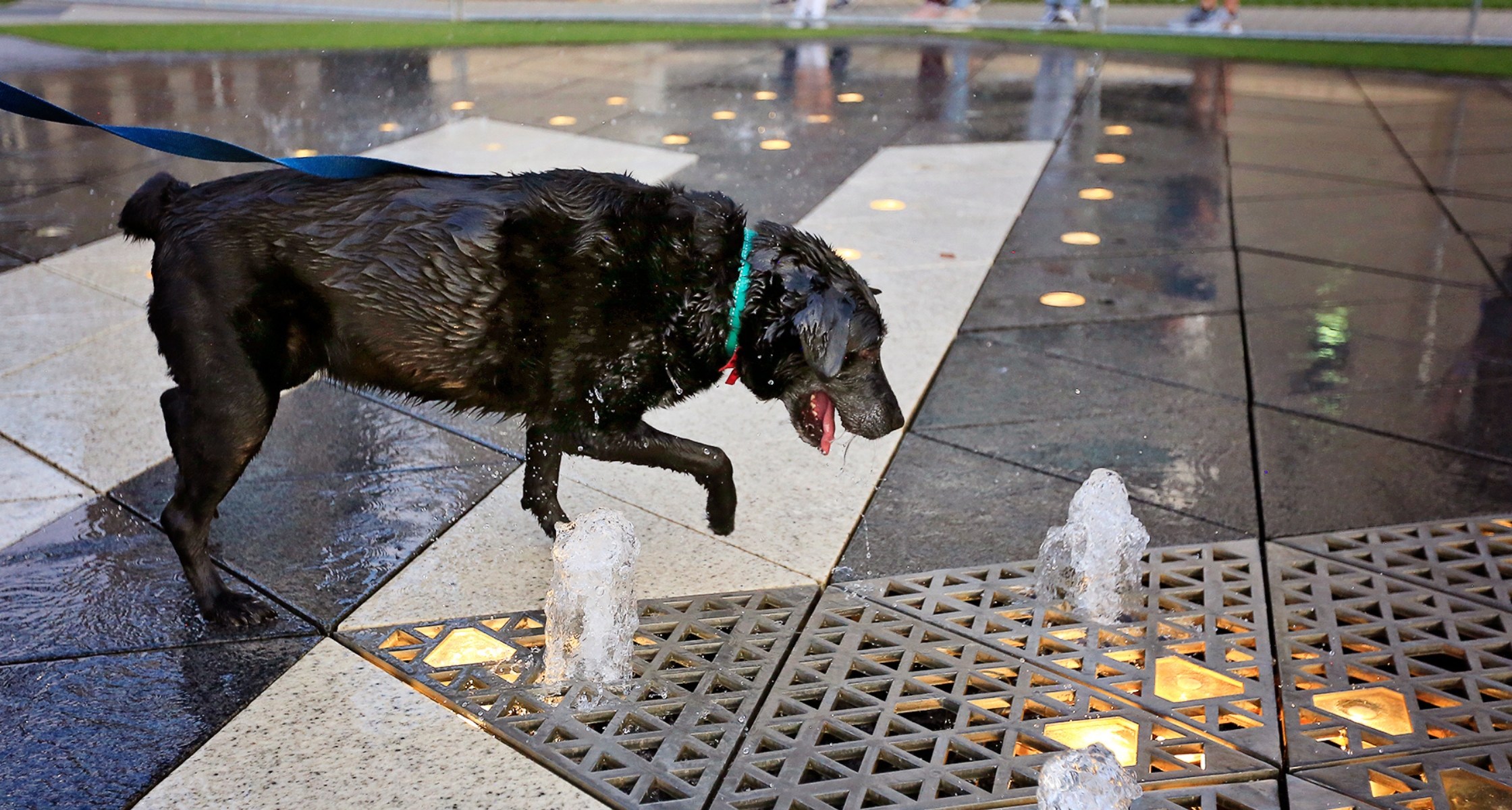
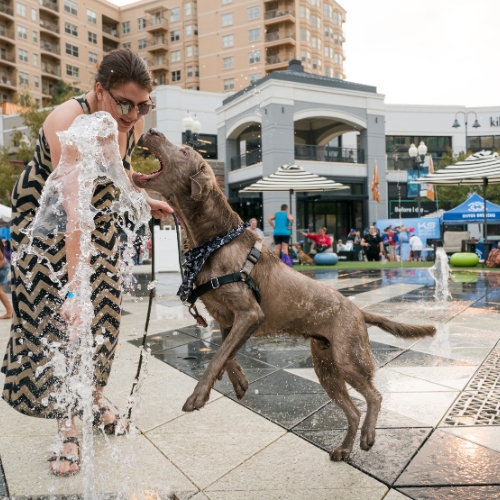
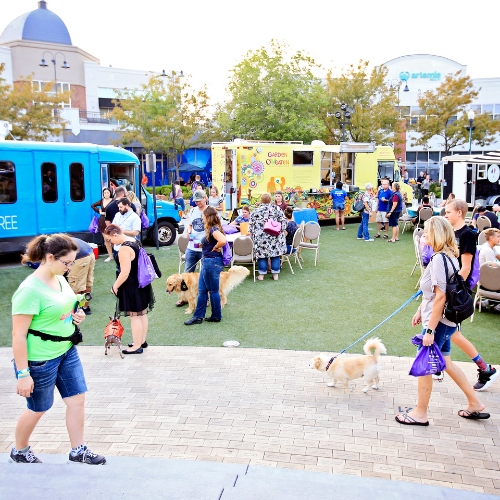
Bark at the Moon will feature over 30 local vendors, food trucks, craft beer, live music, a splash zone for the dogs, a doggy food truck, Instagram-worthy photo opportunities, and more. At 9 pm, pets and people can participate in a glow walk around The Gateway.
As a local private nonprofit, the Humane Society of Utah relies solely on donations and small fees for some services; we do not receive state or federal funding and are not a branch of any national organization. However, we are grateful for our sponsors like Subaru and community supporters like you! To purchase your tickets to Bark at the Moon, click here.
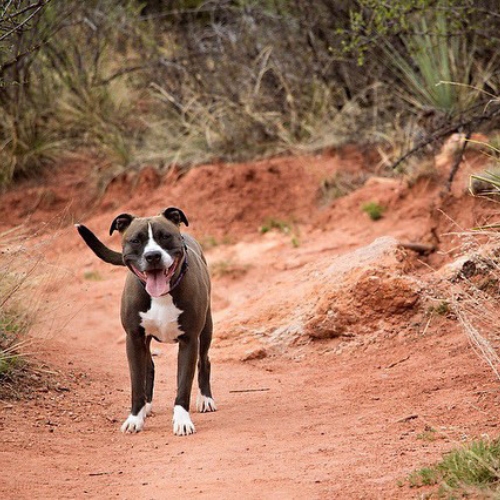
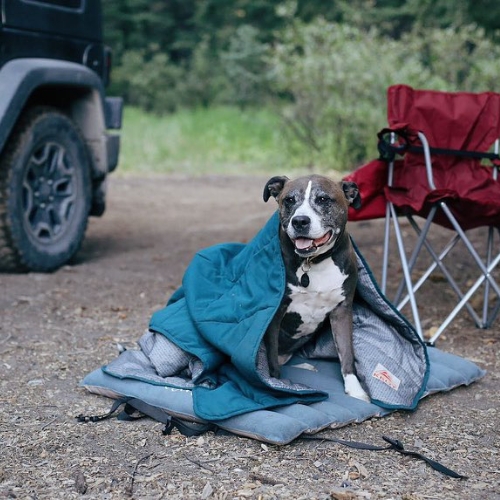
If you’ve ever wondered about the definition of “adventure dog,” Rainey’s picture is right next to it in the dictionary… or at least it would be if “adventure dog” were in the dictionary. However, that isn’t how Rainey’s story began… first, she was just a dog in a shelter, waiting to find her family.
From shelter dog to adventure dog
Rainey was adopted from the Humane Society of Utah in 2014 by her human, Tiffany. Little did either of them know then that for the next 9+ years, they would be best friends, travel companions, one another’s support system, and more.
“Rainey has been at my side through career changes, moving states, and everything life has thrown at us… She loves to travel, adores the sunshine, and loves adventures and camping. She tolerates her little sister and her bird siblings and is gentle and kind with everyone she meets,” Tiffany said.
Rainey’s interests besides adventure include popcorn and cheese (but really any snacks), meeting people wherever she goes, and being an absolute champion at always having a smile on her face.
Reflecting on her time with Rainey, Tiffany said, “She’s been my very best friend. There are no words to fully describe how amazing of a companion she’s been for almost a decade now.”
Do you have a heartwarming adoption update you want to share? Then, please post your story on our Facebook Adopted Pets group! We love getting adoption updates and adoption success stories.
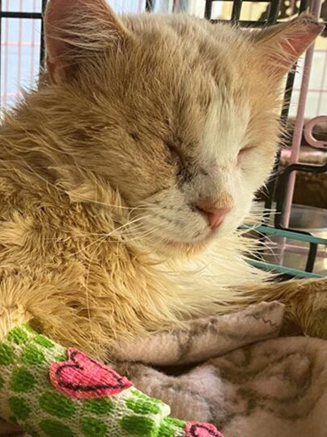
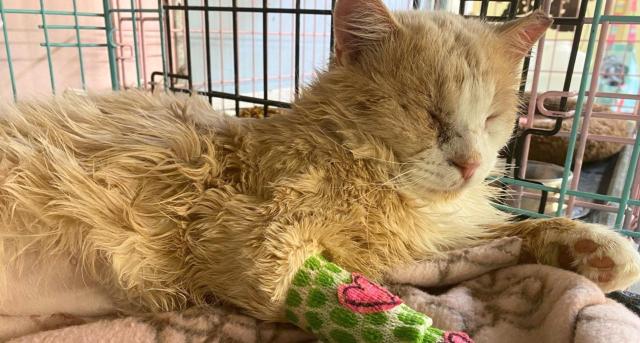
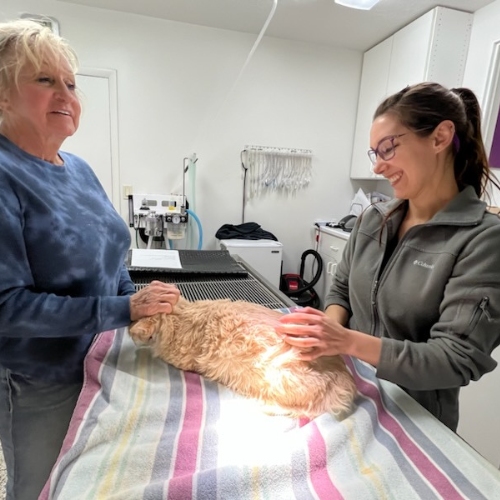
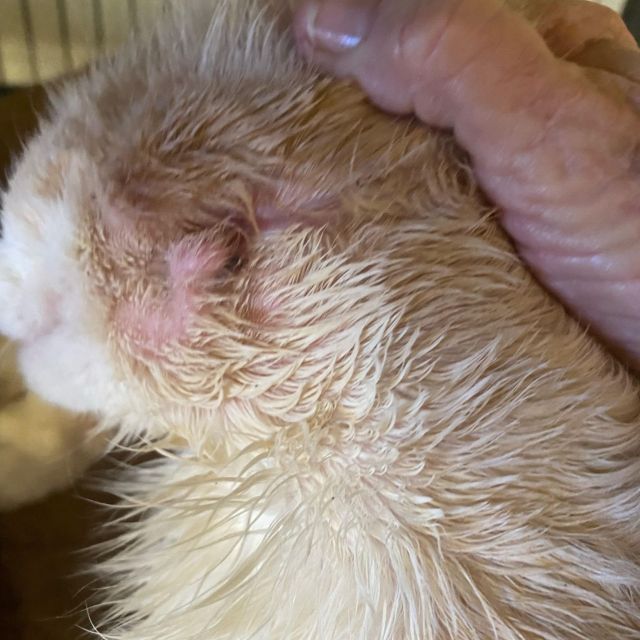
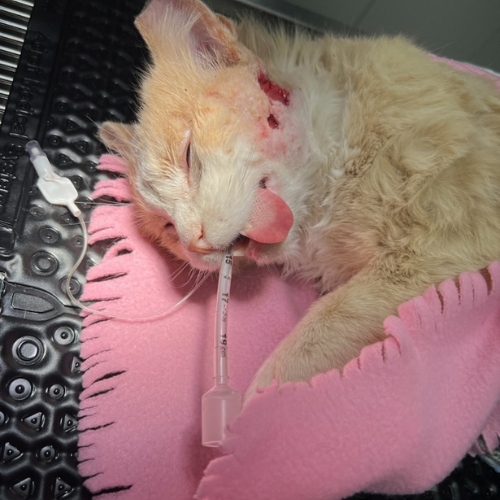
An injured cat, Mango, arrived at the Humane Society of Utah’s St. George Clinic with a gaping and infected face wound. A local rescue, One More Chance, had brought him to our clinic through our Trap-Neuter-Return (TNR) program. TNR involves fixing, vaccinating, and ear-tipping feral and stray cats, then returning them to their territory. TNR is a humane way to control the community cat population and stop the spread of fatal viruses, such as rabies and distemper.
An injured cat gets the help he needs
After assessing his injury, our veterinarian, Dr. Gray, realized the wound could not be sutured- it was too infected. So, she cleaned and debrided the injury in hopes of helping it contract down and heal together naturally. During Mango’s examination, Dr. Gray also noticed he had necrotic, or dead tissue, surrounding an old wound on his right front paw. The most likely cause was that Mango previously had something wrapped around his paw that restricted his blood flow for a considerable time.
As Dr. Gray carefully removed the dead tissue, she realized three of the toes were completely dead, and she’d only be able to save two of Mango’s five toes. Dr. Gray cleaned and debrided the injury, leaving only fresh, healthy tissue so the rest of his paw could heal. Dr. Gray shared, “As soon as we became aware of Mango’s disability, we knew he couldn’t be released to live as a feral cat. It wouldn’t be safe for him. So, we called Kris Neil, owner of One More Chance, to ensure Mango would have a safe place to live after his surgery. Kris said that Mango could live with her until she could find a good home for him, which relieved me greatly.”
Because Mango’s right front paw was now permanently in the unmistakable “hang loose” sign, the ultimate symbol of Aloha in Hawaii serving as a reminder not to worry or rush, HSU’s St. George staff lovingly nicknamed him “Shaka.” Since Mango proved unusually chill for a feral cat, even coming off as sweet and friendly, his new nickname suited him perfectly.
Mango was so friendly that our St. George team found it hard to believe that he grew up as a feral cat. Upon further research, our team discovered that Mango most likely lived in a home with two other cats until his owner died a year ago. The other two cats were caught and rehomed, but the third cat remained missing ever since.
After Dr. Gray cared for Mango’s wounds and completed his neuter, vaccinations, ear tipping, and an umbilical hernia repair, she sent Mango home to recover with Kris. But as the weeks passed, Dr. Gray realized that she missed him. She felt a special bond with Mango and found herself considering adopting him. Dr. Gray explained, “The issue was I’d just had a baby and didn’t think it was an ideal time for me to bring home a new cat.”
Still, she worried about Mango and occasionally reached out to Kris to ensure he was happy and healthy. “Kris shared with me that Mango had taken on the role of “cat nanny” at her rescue as he was cuddling and caring for the other cats, especially the kittens. Mango is so sweet; it sounded exactly like something he’d do.”
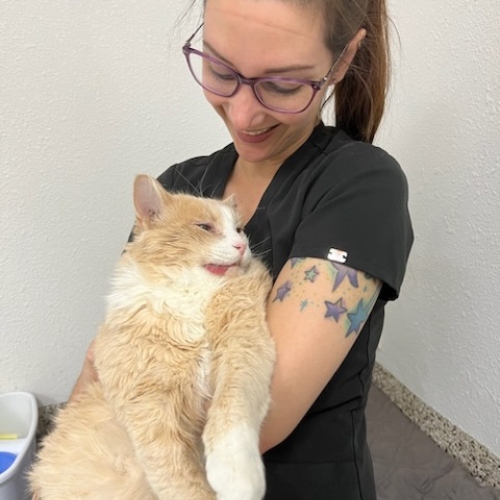
A few weeks later, Mango visited Dr. Gray for a check-up to ensure his paw and face were healing nicely. Dr. Gray was excited to see her darling Shaka. She’d missed him fiercely. During their reunion, Dr. Gray realized she was madly in love with this hang loose disabled cat with the scarred-up face. He’d stolen her heart, and after learning that he still hadn’t found a permanent home, Dr. Gray decided to adopt him. She knew Mango would happily take on the role of ‘cat nanny’ to her newborn baby.
Months after adopting him, Dr. Gray shared, “Mango is such a sweet addition to our family. He’s healed, living a cozy life of luxury, and surrounded by so much love. Our dogs adore him, too, and they happily make room for Mango on their bed. I’m so happy he came to our clinic that day. I love knowing he’s safe now at home with us.”
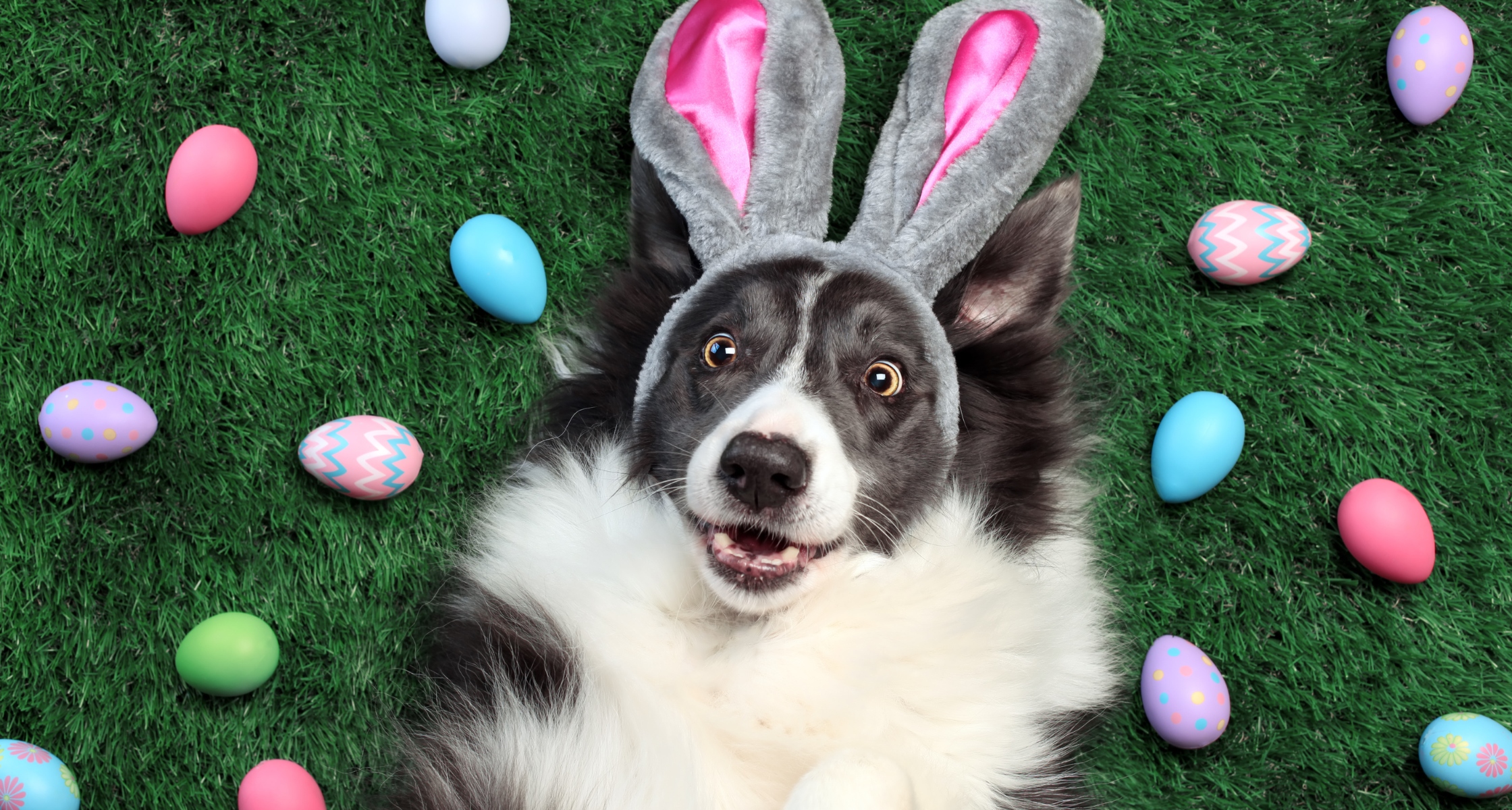
Peter Cottontail hops down the bunny trail with many treats! However, while some parts of the Easter celebration are safe for our pets to partake in, others are not. Follow these Easter pet safety tips to ensure a “Hoppy” holiday!
Easter Treats
Keep pets away from anything containing chocolate or xylitol (sometimes called “birch sugar”), which is a popular ingredient in sugar-free candy. Don’t allow children to store their Easter baskets in their room. Pets have very strong noses and can likely find even the most carefully hidden treats. Keep candy up high and stored securely out of paws reach.
Easter Foliage
Easter lilies and tulips may be beautiful, but are often deadly for cats. Be sure to keep these popular flowers out of your bouquets if feline friends could come across them. Safer alternatives include roses, gerber daisies, and sunflowers.
Easter Decor
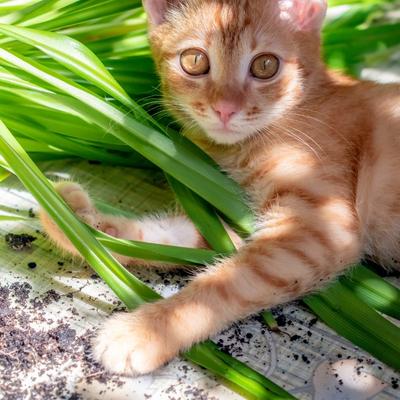
Plastic Easter grass causes several vet visits every year as ingesting it can cause blockages and intestinal damage. If your pet does ingest Easter grass, refrain from pulling strings out of their backside. String can become twisted around your pet’s insides and pulling it out can cause further damage. Please visit your emergency veterinarian instead.
Egg Hunts
If you’re hiding eggs, be sure to note how many eggs you’ve hidden and where they are. Both plastic and real Easter eggs can cause issues for pets if eaten or broken. Keep pets clear of the egg hunt area until everything has been thoroughly cleaned up.
Easter Dinner
Sharing a plate with your pet? It’s important to know what foods are not pet-safe, such as onions, avocados, olives, garlic, grapes, cooked bones, uncooked dough, and alcohol.
Humane Society of Utah Alerts Public of a Possible Parasite Outbreak
Murray, Utah, March 29, 2023 — Humane Society of Utah officials are alerting the public of a possible parasite outbreak after several dogs were surrendered from different homes with confirmed cases of Giardia. Giardiasis is a common parasitic infection that can cause diarrhea in dogs. It is caused by an intestinal parasite called Giardia, found in feces-contaminated soil, food, and water. HSU officials believe the cases are tied to people who visit busy off-leash dog parks and hiking areas.
“As the snow melts, much of the pet waste which was hidden by the snow can now expose dogs to Giardia,” says Dr. Timna Fischbein, DVM, medical director at Humane Society of Utah. “The cysts are trophozoites protected by an outer shell and shed in the dog’s stool. Cysts can survive in the surrounding environment for months. They are instantly infectious, and just a few ingested cysts can cause infection. A dog can easily get infected by grooming themselves and licking the cysts off their paws.”
While this parasite can be spread in several ways, water is the most common way to spread the parasite. Therefore, HSU officials advise avoiding high-traffic areas such as dog parks and foothill trails while muddy and wet.
SYMPTOMS AND INDIVIDUAL PRECAUTIONS:
Symptoms include diarrhea, vomiting, excess foul-smelling gas, decreased appetite, and weight loss.
Seek veterinary care if your pet has diarrhea that is not going away. Diarrhea has different causes and could result in dehydration or other serious problems.
A licensed veterinarian must make a diagnosis and treatment for Giardia infection.
No approved over-the-counter treatment is available for Giardia infection.
Clean and disinfect potentially contaminated items (for example, toys, water bowls and food bowls, pet bedding, floors, dog crates, linens, and towels) regularly for as long as your pet is sick.
If your pet is taking medication, clean and disinfect potentially contaminated items frequently (daily if possible) until a few days after the last dose of medication is given.
Bathe all household pets with pet shampoo following medical treatment to ensure no feces are in the pet’s coat.
###
About the Humane Society of Utah
The Humane Society of Utah is dedicated to the elimination of pain, fear, and suffering in all animals. Since 1960, the Utah Humane Society has been sheltering homeless animals, fighting cruelty and neglect, and creating an atmosphere of respect, responsibility, and compassion for all animals. As the largest open-admission private animal resource center in the state, the Utah Humane Society welcomes any companion animal that can legally be admitted. We work hard to ensure that every healthy and treatable pet that enters the facility will be placed into a loving home. The Humane Society of Utah is a local, independent 501(c)(3) private nonprofit organization that does not receive any state or government funding and is not a branch of any national organization. It is funded by the contributions of individuals, businesses, and foundations. Read more online atwww.utahhumane.org.
4242 South 300 West Murray, UT 84107 / 801-261-2919 / UtahHumane.org / @utahhumane
Woman’s hands holding a piece of white paper that says reward on it.
News Release
Murray – Utah, Mar. 25, 2023
Humane Society of Utah offers a $15,000 reward for information leading to the arrest and conviction of those responsible for killing two wild horse stallions shot on the Onaqui Mountain Herd Management Area.
Humane Society of Utah urges anyone with information regarding the shooting to call the BLM Utah Law Enforcement Tipline at 800-722-3998. Any tipster can choose to remain anonymous.
###
About the Humane Society of Utah
The Humane Society of Utah is dedicated to the elimination of pain, fear, and suffering in all animals. Since 1960, the Utah Humane Society has been sheltering homeless animals, fighting cruelty and neglect, and creating an atmosphere of respect, responsibility, and compassion for all animals. As the largest open-admission private animal resource center in the state, the Utah Humane Society welcomes any companion animal that can legally be admitted. We work hard to ensure that every healthy and treatable pet that enters the facility will be placed into a loving home. The Humane Society of Utah is a local, independent 501(c)(3) private nonprofit organization that does not receive any state or government funding and is not a branch of any national organization. It is funded by the contributions of individuals, businesses, and foundations. Read more online atwww.utahhumane.org.
4242 South 300 West Murray, UT 84107 / 801-261-2919 / UtahHumane.org / @utahhumane
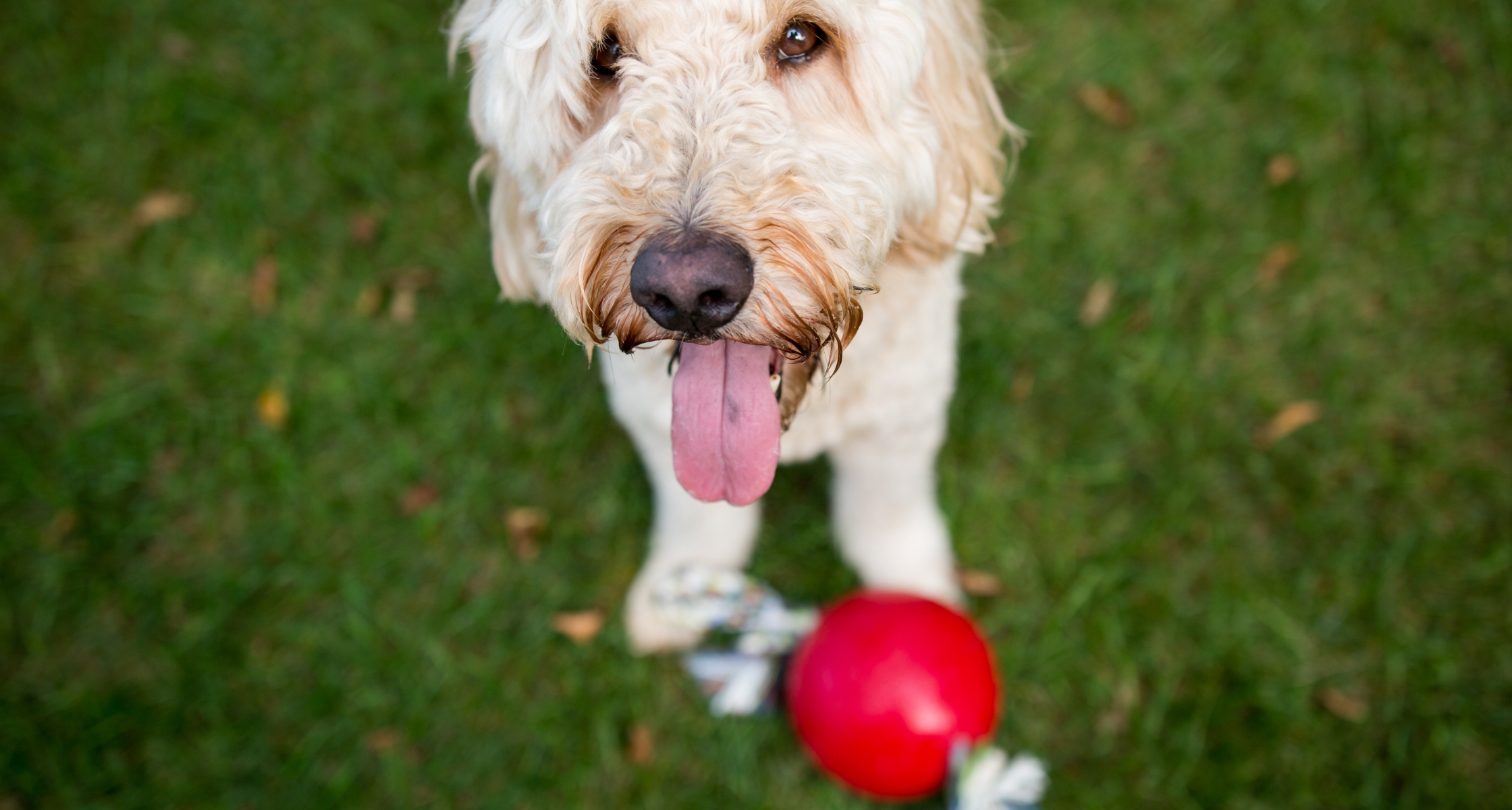
In the last two years, the Humane Society of Utah has seen a large influx of doodle dogs surrendered to our shelter. This blog will address why and what you should consider before bringing home one of these popular dogs.
What’s a doodle dog?
First, what is a doodle? A doodle is any breed of dog mixed with a standard, miniature, or toy poodle. For example, a golden doodle mixes a poodle and a golden retriever, aussiedoodle = Australian shepherd x poodle, and bernadoodle = Bernese mountain dog x poodle.
Doodles gained notoriety from Wally Conron, a breeding manager for the Royal Guide Dog Association of Australia in the 1980s. Conron tried to find a guide dog for a blind woman whose husband was allergic to dogs. He came up with the idea to cross a poodle with a Labrador retriever, hoping the positive traits that make Labs great service dogs would combine with the non-shedding characteristics of a poodle. This history may suggest that doodles are hypoallergenic and make great family pets.
Are all doodles hypoallergenic?
However, there is no such thing as a truly hypoallergenic dog. Allergens carry in dander (dead skin cells), saliva, and urine, so they are impossible to avoid altogether. Some dogs produce fewer allergens or shed less than others, but no dog is completely free of allergens. In addition, allergies vary from person to person, so you never truly know if or how badly you will react to a particular dog. That’s why we always suggest treating every dog as an individual and interacting with them before bringing them home.
Second, it’s not black and white when it comes to genetics and mixing breeds. When you take the genes of two breeds, there is no guarantee of the puppy’s traits. You risk losing the desirable characteristics of each breed and inheriting health issues and undesirable traits. While mixing two dogs may counteract some of the specific hereditary diseases from each parent dog, there’s still no guarantee about which genes your pup will inherit. You could end up with any combination of these conditions, especially in the first mixed generation. Please keep in mind where and how we raise puppies can also contribute to their adult behavior. Puppies who experience early exposure and positive interactions with different people and environments in a home setting will have a better chance of success.
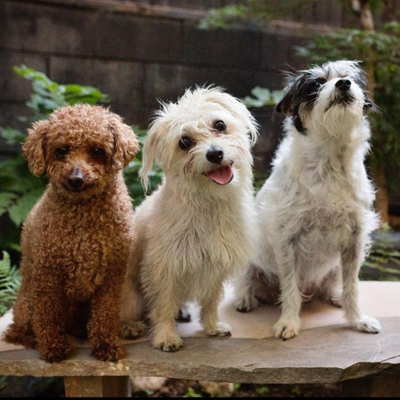
Doodle puppies who “look the part” and are supposedly hypoallergenic often cost more than doodle puppies who still shed or have a nontraditional-looking coat. That’s right; doodles have different types of fur! Many appear wiry, like Jack and Simba (pictured below). While wiry doodle coats will likely shed, they won’t require the regular trips to the groomer for trims and de-matting like a poodle coat will.
Jack (center) adopted from HSU DNA results came back primarily as a miniature poodle and Pomeranian mix. Simba had his DNA test while waiting for adoption at HSU. He is a Lab standard poodle cross.
Do all doodles act the same?
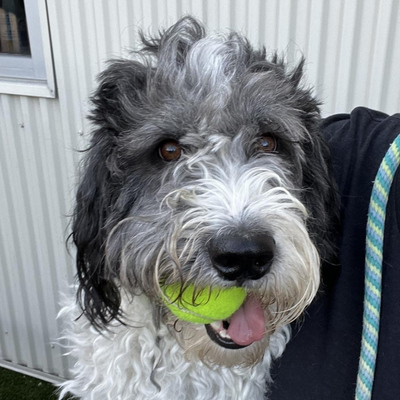
Third, because doodles are mixed with many other breeds, their behaviors come in a wide variety. For example, some families expect their doodle to behave low-key and goofy like their friend’s golden doodle. But, they preferred the blue merle coloring of the sheepdoodle or aussiedoodle may be in for a big surprise. Richard (pictured below) went through multiple families for not “behaving” like a doodle. He had a poodle coat, but he exhibited strong herding breed-like behaviors.
Richard’s DNA test revealed he was a standard poodle sheepdog cross.
Doodles come in all shapes, colors, and sizes and can make wonderful additions to most families. However, we encourage you to do your research and understand that the doodle puppy in front of you may grow up differently than you expect. We often have poodle mixes available for adoption at HSU. Take a look at our website first if you’re considering one for your family. Like all our dogs, they come spayed/neutered, microchipped, dewormed, and have age-appropriate vaccinations.
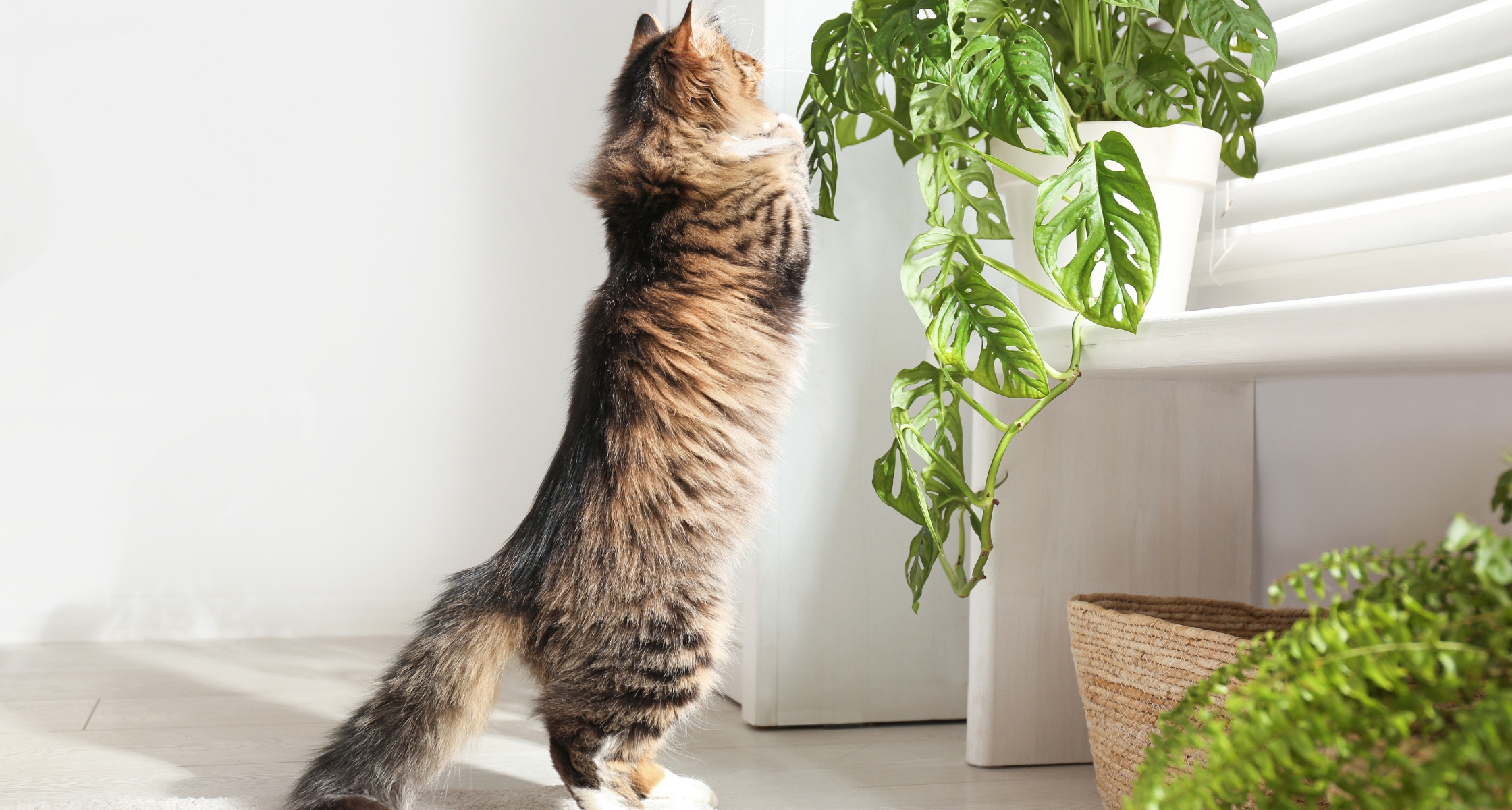
With spring right around the corner, many people are gearing up for green leaves and bright blossoms. Adding plants to your home can be exciting and fun, but did you know some plants pose a danger to your furry friends? It’s important to get familiar with safe houseplants for cats!
What are some safe houseplants for cats?
Finding plants you and your cat can safely enjoy isn’t hard! There’s a variety of safe houseplants for cats. If gorgeous green leaves catching sunlight sounds like a dream to you, here are some plants to look for:
Spider plant
Calathea Orbifolia
Peperomia
Baby Tears
Prayer plant
Some people prefer stunning colorful flowers hanging out in their homes. Don’t worry. There are plenty of beautiful blossoms that are also safe for cats! If you’re bringing flowers inside, either to plant or in a bouquet, here are some cat-safe ones to keep in mind:
Orchid
Rose
Bromeliad
African violet
Gerber daisy
Other safe houseplants for cats include:
Venus fly trap
Polka dot plant
Basil
Thyme
Catnip (of course!)
What plants are dangerous for cats?
While we like to focus on the positives, it is important to note that there are many plants that are toxic to cats. Lilies, tulips, and aloe have all earned the title of being dangerous for cats. If you’re unsure if your plant is cat friendly, click here for a list of plants that could pose a danger to your cat.
It is possible to create a home that’s safe for humans, cats, and plants alike! Knowing what plants to look for when finding safe houseplants for cats is extremely important. Doing a little research now can ensure your cat stays happy and healthy!